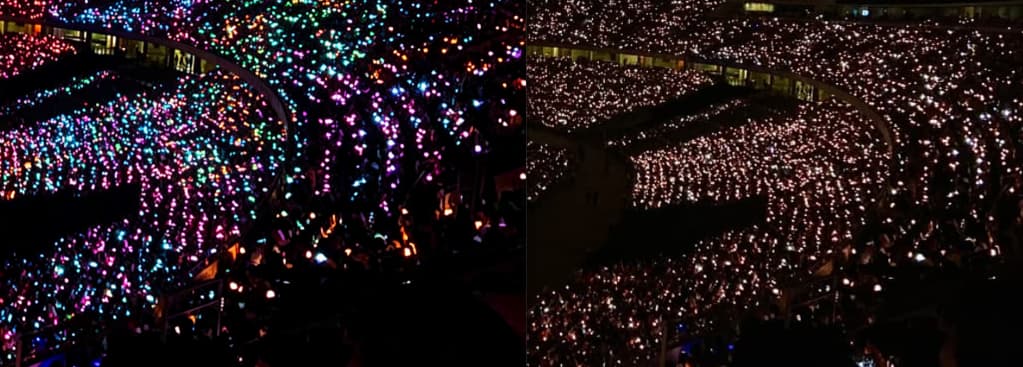
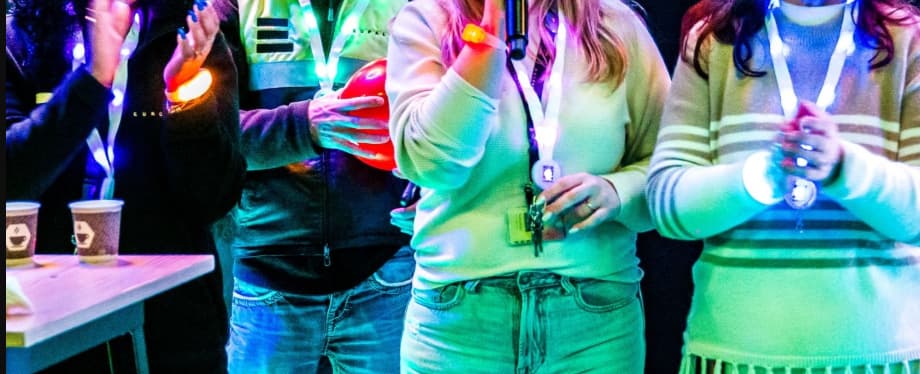
Programmable LED lanyard showing custom light pattern sequences with RGB color changes in a dark event environment

Programmable LED Lanyard

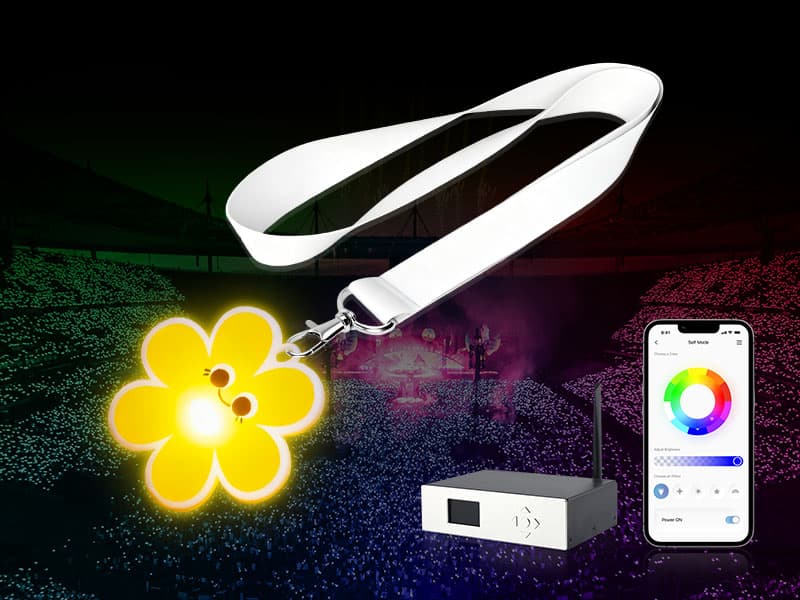
Not just a light-up badge — a programmable LED wearable with a custom light engine. Choose from 4 built-in flash modes out of the box, or program your own sequences via DMX, APP, or firmware configuration. Every GFLAI lanyard has a microcontroller inside. What it does is up to you.

4 Built-in Modes Unlimited Custom DMX Addressable APP Configurable Firmware OTA
Explore Programmability →

Four Dimensions of Programmability

An LED lanyard can be programmed across four independent dimensions. Each dimension adds a layer of customization depth — from simple out-of-box patterns to fully custom firmware behavior.

1

Light Patterns

Every lanyard ships with 4 built-in flash modes: Slow Flash (1 Hz gentle pulse), Fast Flash (3 Hz rapid blink), Strobe (10 Hz intense burst), and Fade (smooth RGB color transition). These are stored in the microcontroller's firmware and activated by tapping the push button.

Beyond the built-in modes, the firmware supports custom pattern programming. A custom pattern is a sequence of color + brightness + duration steps stored in the chip's memory. For example: blue 100% for 2s → fade to white over 1.5s → white strobe at 8 Hz for 3s → off for 1s → repeat. Because the pattern is stored in non-volatile memory, it is not lost when the battery runs out — after installing fresh batteries, the same custom pattern runs without needing to be reprogrammed.

4 built-inCustom sequencesUp to 32 stepsNon-volatile
2
🎵

Control Triggers

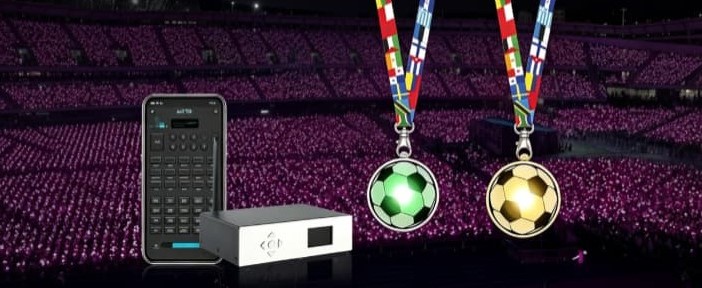
What tells the lanyard to change its behavior? The programmable trigger system supports four input sources: the built-in push button (tap/hold sequences), RF remote signal (GFC004, 433MHz, 250m range), DMX512 command (GFC005, from any lighting console), and APP command (GFC008, via Bluetooth or internet).

Each trigger can be mapped to a different response. For example: push button cycles through 7 colors, RF remote triggers a crowd-wide strobe, DMX console runs a 16-step chase sequence, and APP lets the wearer pick a custom color from a palette. Because the trigger mapping is programmable, the same lanyard can behave differently depending on which transmitter is active.

ButtonRF 433MHzDMX512APPTrigger mapping
3

Timing & Sync

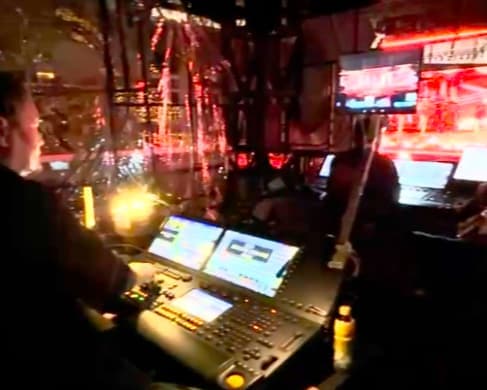
Programmable timing controls three aspects: pattern speed (adjustable from 0.5 Hz to 20 Hz), synchronization (all lanyards receive the same RF or DMX command within <5ms), and schedule (timed sequences that run for a set duration then stop). For DMX-controlled shows, the lighting programmer sets the timing in the console; the lanyards follow the show file.

For standalone custom patterns, the timing is defined in firmware — duration per step, transition curve (instant, linear fade, or S-curve), and loop behavior. Because the microcontroller runs from an internal oscillator, timing is consistent across all units in a batch. No calibration needed between lanyards.

<5ms sync0.5-20 HzTimed sequencesConsistent batch
4
🎨

Brand Integration

The programmable layer extends to the visual identity of the lanyard itself. The badge can be laser-cut into any brand logo shape, with LEDs positioned to highlight specific features of the silhouette. The strap supports full-color sublimation printing for photographic brand artwork. The APP (if ordered) is white-labeled with your brand colors, logo, and name.

On the firmware side, brand-specific color palettes can be programmed — replacing the default 7-color cycle with a sequence of your brand colors only. This means the lanyard cycles through your corporate palette, not a generic rainbow. Because the palette is stored in firmware, it cannot be overridden by user button presses — the brand identity stays locked.

Logo-shaped badgeBrand paletteWhite-label APPSublimation strap
Custom LED light pattern visualization showing different programmable sequences from slow fade to fast strobe

Built-in & Custom Patterns

Programmable patterns range from the 4 built-in modes to fully custom sequences. Here is what each pattern looks like and how it is typically used.

Slow Flash
1 Hz on-off cycle. Gentle pulse. Best for ambient brand visibility, VIP areas, and after-party settings.
Fast Flash
3 Hz rapid blink. High visibility. Best for crowd identification, safety marking, and event staff.
Strobe
10 Hz intense burst. Maximum attention. Best for concert drops, EDM stages, and synchronized peak moments.
Fade (RGB)
Smooth transition through 7 RGB colors. Ambient. Best for brand reception, decoration, and non-intrusive ambiance.

Custom Pattern Example: Brand Reveal

01LED off — 2 seconds (anticipation)
02Fade to brand blue — 1.5 seconds
03Hold blue at 100% — 3 seconds
04Strobe blue 8 Hz — 1 second
05Fade to white — 1 second
06White hold — 2 seconds (logo moment)
07Fade out — 1.5 seconds → loop

Total duration: 12 seconds. Programmed once, repeated across 10,000 units via DMX. Zero variation between lanyards.

Custom Pattern Example: Color Wave

01Zone 1 (Left) red — 0.5s ramp up
02Zone 2 (Center) blue — 0.5s after Zone 1
03Zone 3 (Right) green — 0.5s after Zone 2
04All zones white — 1s simultaneous
05Reverse wave: Right → Left — 1.5s
06All fade to off — 1s
07Loop from start

Requires DMX zone control (GFC005). Each zone is a separate DMX address group. One transmitter, three zone behaviors.

Real Programmable Deployments

Three events where programmability was the deciding factor — not just color, but choreographed light behavior.

Stadium concert tour with programmable DMX synchronized LED lanyards performing a choreographed color wave across 30,000 fans
Stadium Tour

30,000 GFH-001 + DMX

A 12-date stadium tour programmed 24 custom light cues into the grandMA3 lighting console. Each song had its own lanyard color sequence — white for ballads, RGB strobe for anthems, zone wave for the encore. Because the lanyards were DMX-addressable, the lighting programmer cued them alongside moving heads and LED walls on the same timeline.

Brand launch event with APP programmable LED lanyards allowing guests to choose from a curated brand color palette
Brand Launch

2,500 GFH-004 + APP

A global tech brand launched its new product with programmable lanyards controlled via a custom white-label APP. The brand's 6-color palette was programmed into the firmware — guests could only choose from approved brand colors, not the full RGB spectrum. During the CEO's keynote, a DMX override triggered all lanyards to white simultaneously, then released back to individual APP control.

Custom firmware programmed LED lanyard with unique light sequence designed for a specific artist performance
Artist Tour

15,000 GFH-005 + Firmware

An artist wanted the lanyard to pulse in sync with their heartbeat at the start of the show — a unique pattern no standard mode could achieve. GFLAI programmed custom firmware: a slow ramp-up to green over 3 seconds, a brief hold, then a fast fade to black. The effect repeated at 72 BPM (matching the opening track's tempo). The firmware was loaded before shipment and could not be overwritten by button presses.

Which Models Are Programmable?

Every GFH model has a microcontroller. The programmability depth varies by model based on LED count, RF receiver support, and DMX compatibility.

001
Nylon + ABS
✓ 4 built-in patterns ✓ Custom firmware ✓ DMX programmable ✓ APP configurable
Full stack
002
TPU + ABS
✓ 4 built-in patterns ✓ Custom firmware ✗ DMX ✗ APP
Basic
003
Round Medal
✓ 4 built-in patterns ✓ Custom firmware ✓ APP configurable ✗ DMX
Mid stack
004
Acrylic
✓ 4 built-in patterns ✓ Custom firmware ✓ DMX programmable ✓ APP configurable
Full stack
005
Custom Acrylic
✓ 4 built-in patterns ✓ Custom firmware ✓ DMX programmable ✓ APP configurable
Full stack

Custom firmware programming available for all models. Minimum order for firmware customization: 200 units. Contact us with your pattern specification.

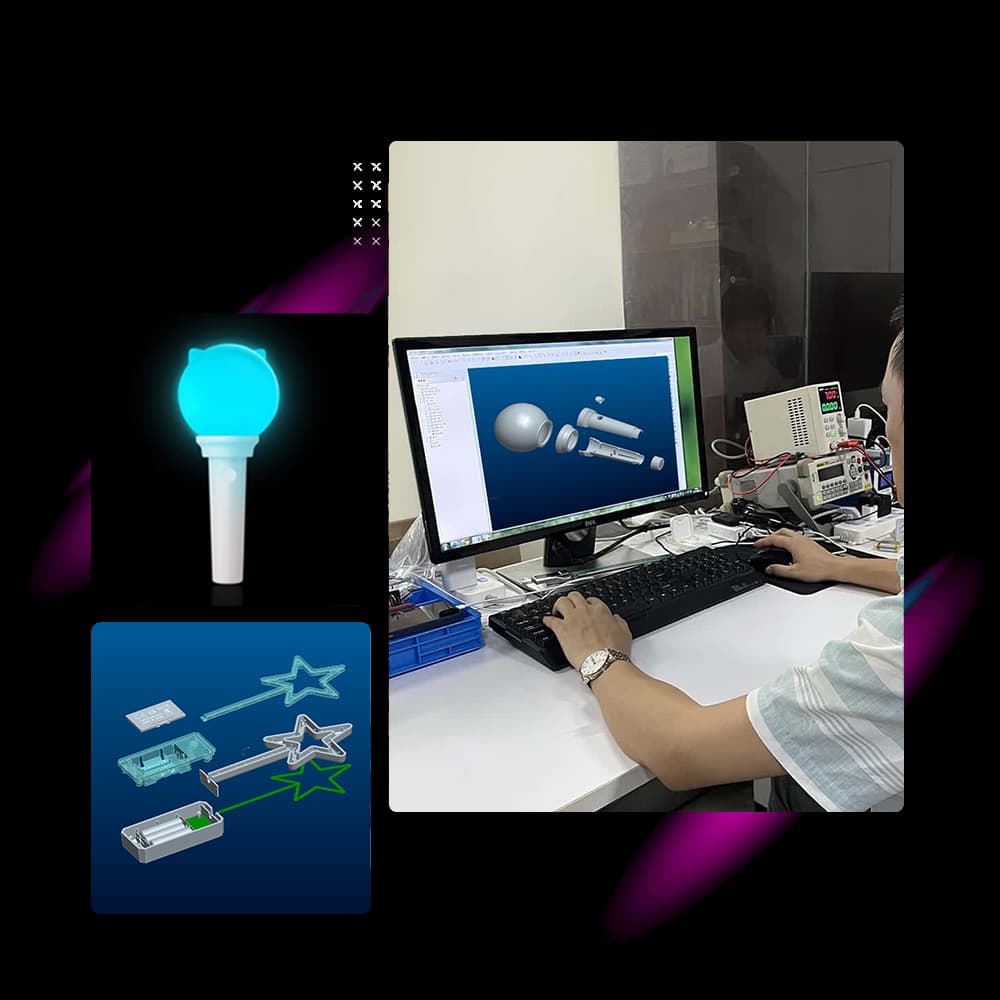
GFLAI programmable LED lanyard engineering team and production facility in Shenzhen China performing firmware testing

In-house firmware engineering & production — Shenzhen, China

Firmware & Hardware Under One Roof

Programmability requires more than just a microcontroller — it requires the engineering team that understands both the firmware and the hardware it runs on. Because GFLAI designs the PCB, writes the firmware, and assembles the final product, we can program custom behavior at the silicon level — not just abstracted through a third-party controller.

Our firmware team handles custom pattern development, DMX address mapping, APP integration, and OTA update capability. Because we control the bootloader, we can also lock the firmware to prevent overwriting after deployment — useful for brand events where the pattern must stay fixed.

Custom firmware PCB design DMX mapping APP integration OTA capable

Programmable LED Questions

Can I program my own light pattern without any coding experience? +
Yes. You provide a description of the sequence (color order, timing, brightness levels) and our firmware team programs it for you. No coding required on your side. For clients who want to program patterns themselves, we can provide the firmware specification document and support the integration process. The simplest approach is to tell us "I want the lanyard to fade from blue to white over 3 seconds, then pulse red 5 times" — we translate that into microcontroller code.
Can the firmware be updated after the lanyards are shipped? +
Yes, for models with APP or DMX capability. Firmware updates can be delivered OTA (over-the-air) through the GFC008 APP transmitter or via a programming jig for wired updates. For basic push-button models (GFH-002), firmware is pre-loaded during production and cannot be updated in the field — but the 4 built-in modes are always available. If you anticipate needing post-shipment pattern changes, we recommend choosing a model with DMX or APP compatibility for remote reprogramming.
How many custom patterns can be stored in the lanyard's memory? +
The microcontroller can store up to 8 custom patterns in non-volatile memory, plus the 4 built-in factory modes. Each pattern can have up to 32 steps (color + brightness + duration). The total pattern memory is approximately 2KB, which is sufficient for complex multi-step sequences. If you need more than 8 patterns, the DMX control method effectively removes this limit — patterns are stored in the lighting console, not the lanyard, giving you unlimited virtual patterns per show.
Is the programmable LED lanyard waterproof? +
The electronics (LED module, battery contacts, button) are sealed against moisture ingress equivalent to IP4x — protection against splashes and rain. The GFH-002 with TPU strap is the most weather-resistant model due to its waterproof strap material. For outdoor events in wet conditions, we recommend the GFH-002 with sealed badge compartment. The firmware itself is unaffected by moisture — the microcontroller is potted in the badge housing.
Can the lanyard respond to external sensors or triggers? +
Through custom firmware development, the lanyard can respond to external triggers. Past custom implementations include: sound-reactive (LED brightness varies with ambient noise level via the built-in microphone on select models), timer-based (lanyard flashes faster as a countdown approaches zero), and RF multi-switch (different RF channels trigger different patterns for zone-based control). These custom trigger behaviors require firmware development and are subject to feasibility assessment by our engineering team.
What information do you need to develop a custom pattern? +
We need: the sequence of colors (by name, hex code, or RGB value), the timing for each step (in seconds or milliseconds), the transition type (instant on/off, linear fade, smooth S-curve), the loop behavior (repeat indefinitely or run N times then stop), and the trigger source (button tap, RF command, DMX channel, or APP). For complex patterns, a visual reference or storyboard helps. We will produce a firmware sample on a test unit and send you a video for approval before loading it onto the bulk order.

Request a Programmable Quote

Tell us your pattern requirements, preferred control method, quantity, and timeline. Our engineering team will assess feasibility and respond within 24 hours.

Fill in your details below and our sales team will get back to you.