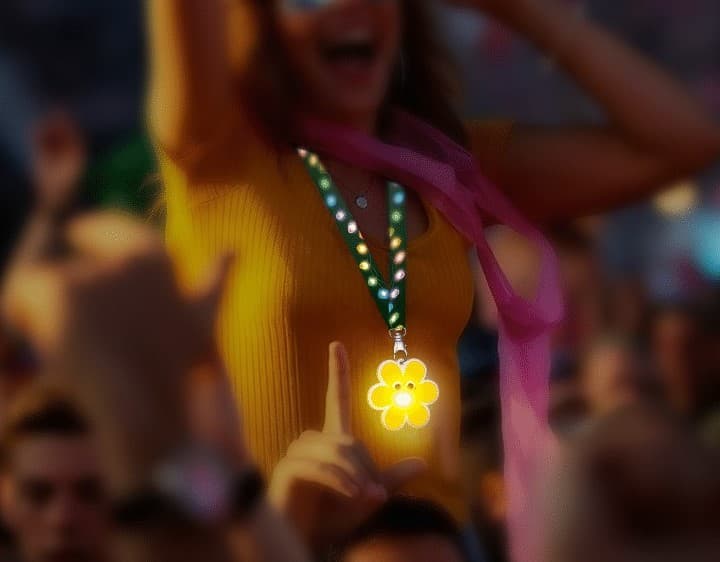
Three types of interactivity. One underlying technology. A guide to turning passive attendees into active participants.
Every event organizer faces the same challenge: how do you keep thousands of attendees engaged beyond the keynote speech or the headliner's set? Giveaways help, but a T-shirt or a glow stick is passive — the attendee receives it, uses it, and discards it. There is no moment of choice, no personal investment, no feedback loop.
An interactive LED lanyard changes this. Instead of giving the attendee a static object, you give them a tool that responds to their input. The attendee makes a decision — tap a button, select a color on an app — and the lanyard responds instantly. That moment of cause and effect creates a psychological anchor. The lanyard is no longer just a piece of branded merchandise. It is a personal device that the attendee has customized.
This distinction — between passive and active engagement — is what makes interactive LED lanyards fundamentally different from every other event giveaway.
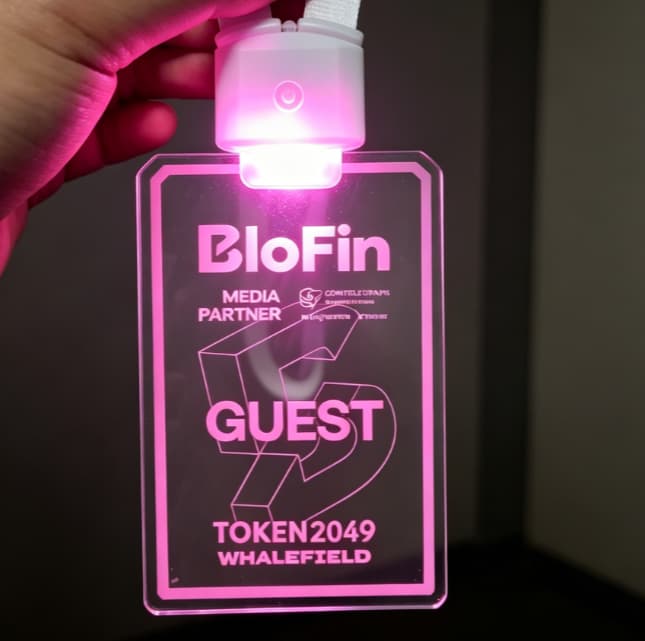
The simplest and most universal form. Every GFLAI lanyard includes a tactile push button integrated into the badge. A single tap cycles through seven RGB colors. A long press toggles the light on and off. The interaction is immediate, tactile, and requires no instruction — the attendee discovers it by accident within seconds of wearing the lanyard.
The push button is rated for 100,000+ press cycles. It is sealed against dust and moisture. During an average event, an attendee might press it 20 to 50 times. The button will outlast the battery and the event itself.
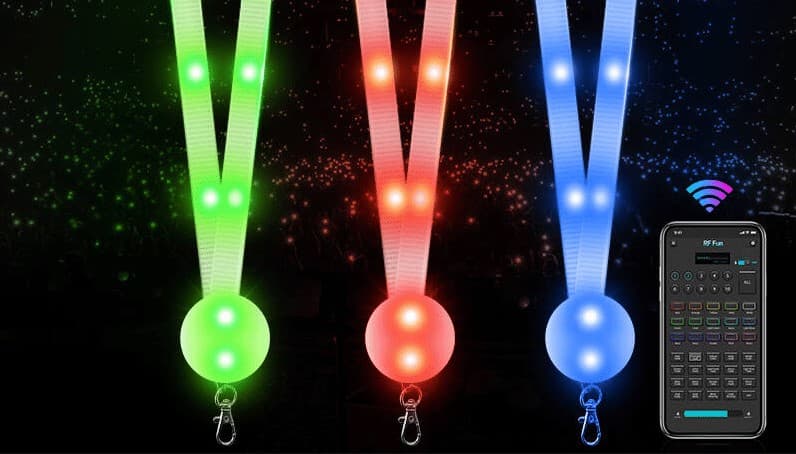
A custom-branded mobile application communicates with the GFC008 transmitter, which broadcasts color commands to every lanyard via 433MHz RF. The attendee opens the app, sees the event's brand palette, and selects a color. The lanyard updates within seconds.
Because the GFC008 uses RF (not Wi-Fi) to reach the lanyards, the lanyards themselves do not need to be on a network. The transmitter receives app commands through the event's Wi-Fi, but the lanyard communication is handled by the dedicated RF link. This means no connectivity issues, no network congestion, and no on-stage pairing.
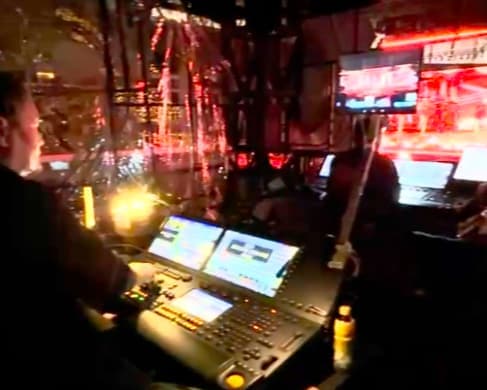
The GFC005 DMX transmitter connects to any standard lighting console. When the lighting operator triggers a cue, the audience's lanyards respond instantly. This creates interactive moments such as "turn your lanyard blue if this is your first event" or "tap to the beat of this song."
The audience is no longer watching — the audience becomes the content. The lanyard response is millisecond-precise because the RF signal reaches all units simultaneously. There is no sequential delay, no lag, no dropout.
"The difference between a passive giveaway and an interactive one is agency. When an attendee chooses their lanyard color, they are no longer a spectator. They are a participant."— GFLAI Product Team
The technology behind interactive LED lanyards is deceptively simple. A microcontroller inside each badge manages the RGB LED driver, reads the push button input, and listens for incoming RF signals from the transmitter. The transmission operates at 433MHz — the same unlicensed ISM band used by remote key fobs and garage door openers — which gives it a 250-meter open-air range and the ability to penetrate most building materials.
The GFC005 DMX transmitter and GFC008 APP transmitter both speak the same RF protocol to the lanyards. This means a single lanyard can be used with any transmitter — you can start with push button control and later upgrade to DMX or APP without replacing the lanyards. The transmitter is the only variable.
For DMX setups, the console sends standard DMX512 values to the GFC005. Those values are translated into RF commands and broadcast to every lanyard within range. Because the DMX protocol is industry-standard, any console — grandMA, Hog, Chamsys, Avolites — can control the lanyards. No proprietary software, no custom hardware, no additional programming environment.
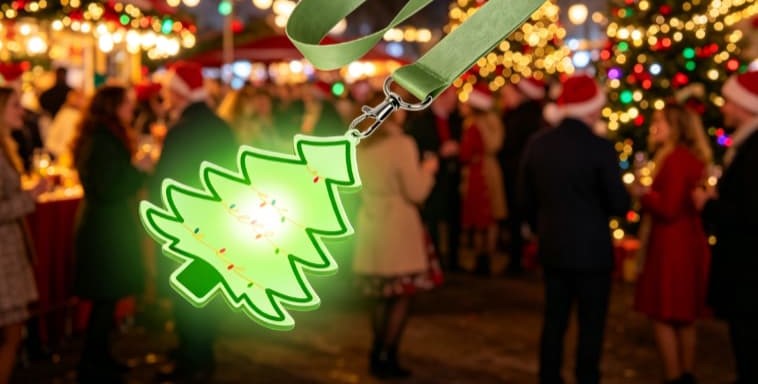
When an attendee interacts with an object — presses a button, selects a color, responds to a cue — they form a memory of that action. This is known as the Ikea effect in behavioral psychology: people place a higher value on things they have actively participated in creating or customizing. An interactive lanyard that the attendee has personally configured is worth more to them than a pre-set lanyard, even if the physical object is identical.
This has measurable outcomes. Interactive lanyards are retained at higher rates than passive giveaways. They are photographed and shared on social media more frequently. Because the attendee has invested a moment of effort — even a single button tap — the lanyard carries a personal memory that a static object does not.
The replaceable battery extends this effect beyond the event. The attendee continues to use the lanyard, continues to see the brand, and continues to remember the interactive moment. A passive giveaway is forgotten. An interactive experience is remembered.
No. The GFC008 transmitter receives APP commands through your event's Wi-Fi network, but the transmitter communicates with the lanyards via 433MHz RF. The lanyards themselves do not connect to Wi-Fi. The RF signal covers a 250-meter radius and reaches every lanyard simultaneously. Network congestion at the venue does not affect lanyard response time.
Yes, through the GFC007 hybrid transmitter. The lanyards respond to DMX cues during the show for millisecond-precise synchronization, and switch to APP control during pre-show or post-show periods for individual attendee interaction. The same lanyard works with both control methods without modification. This is the standard configuration for multi-day events where show sync and audience engagement alternate.
The lanyard follows a priority hierarchy. DMX and APP commands override the push button. If an attendee taps the button during a DMX cue, the lanyard temporarily ignores the button press and maintains the show-commanded color. Once the DMX cue ends, the button input takes effect. This ensures show synchronization is never disrupted by individual actions.
Yes. GFLAI develops custom-branded mobile applications (iOS and Android) for the GFC008 transmitter. The APP includes your event logo, brand color palette, and any interactive features you require — including social sharing, color selection UI, and scheduled color change triggers. Custom APP development is managed as part of the order process.
Yes. The GFC008 transmitter logs connection data, including active lanyard count, color selection distribution, and interaction frequency. This data is accessible to the event organizer during and after the event. The data is anonymous — it tracks lanyard behavior, not individual attendee identities. Aggregate statistics can be shared as part of post-event reporting.
200 units for custom orders with APP or DMX integration. The MOQ covers setup costs for strap printing, badge configuration, and transmitter pairing. For smaller quantities or proof-of-concept deployments, contact our sales team to discuss options.
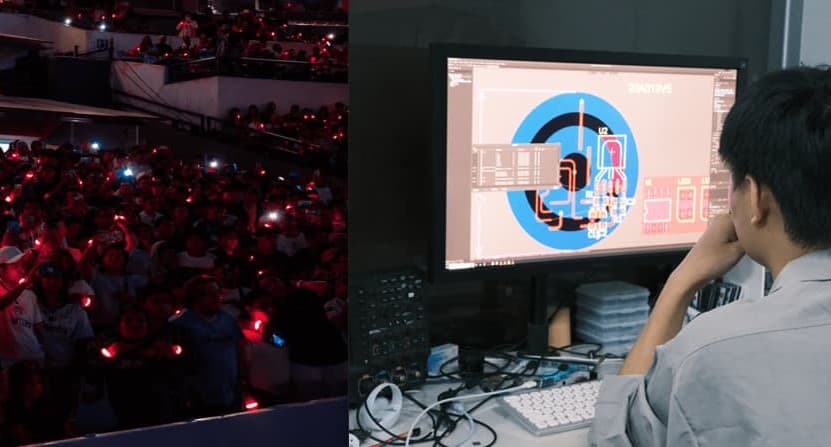
Every interactive LED lanyard from GFLAI is designed and manufactured in our Shenzhen facility. The push button mechanism, the RF receiver, and the LED driver circuit are all assembled and tested on-site. We control the quality of every interactive component — from button click feel to signal reception sensitivity.
This vertical integration is what makes custom interactivity possible. If your event needs a specific button behavior, a custom APP feature, or a unique DMX cue mapping, our engineering team can implement it because we control the entire production chain.
FCC, CE, RoHS, KC certified. DDP shipping to US, UK, EU, Canada, and APAC.
Tell us about your event and interactivity requirements. We respond within 4 hours.