Not every event needs the same depth of interaction. We define three levels — from simple individual control to full show-wide participation.
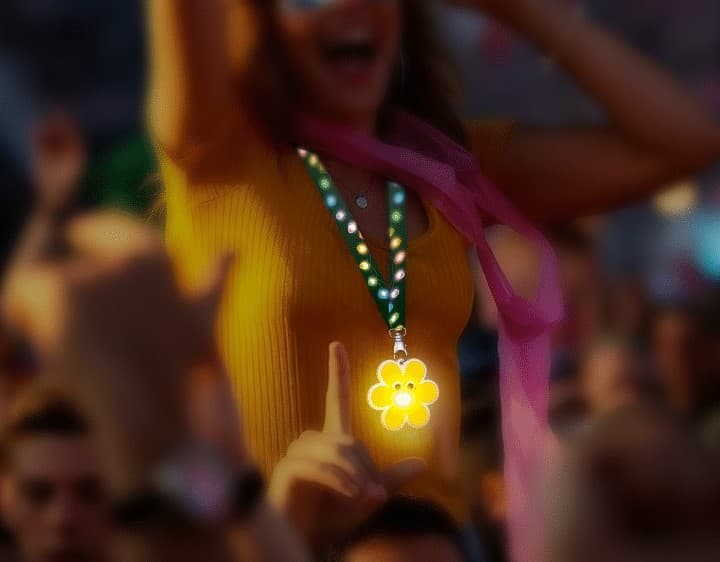
Every lanyard has a built-in push button. The wearer cycles through 7 colors and 4 flashing modes by tapping the button. It is the simplest form of interaction — no app, no remote, no learning curve. Best for events where individual choice matters more than crowd unity.
Because each person controls their own lanyard, the crowd becomes a mosaic of individual color choices. This works well for brand activations where attendees express their preference, or for casual events where unguided color exploration adds visual depth.
Using the GFC004 RF remote or the GFC008 branded mobile APP, event organizers guide the audience's lanyard colors in real time. With the remote, one press changes every lanyard in the venue. With the APP, users opt in and their phone becomes the control interface.
This is the middle ground between individual freedom and full show control. Because the APP lets attendees pick their own color from a brand-curated palette, they feel involved — but the organizer can still broadcast synchronized color shifts for key moments like a product reveal or award presentation.
The GFC005 DMX transmitter connects to any professional lighting console — grandMA, Hog, Chamsys, Avolites. The lanyards become addressable fixtures in the show file. Cue them like moving heads, LED walls, or strobes. Millisecond sync across every unit.
Because DMX512 is an industry-standard protocol, the lanyards integrate into the existing show timeline without extra hardware. During a song drop, the entire audience shifts to white. During a slow ballad, they fade to warm amber. During the encore, a color wave sweeps from stage right to left — programmed right into the lighting desk.
Each feature turns a passive accessory into an active engagement tool. The right combination depends on your event type, audience size, and production setup.
Press the built-in button to step through 7 colors and 4 flashing modes. Because the button is embedded in the lanyard hardware, no phone, signal, or setup is needed. Each person controls their own badge color instantly. This is the baseline interactive feature available on every GFH model.
The GFC004 remote triggers a coordinated color shift across every lanyard within 250 meters. One button press turns the entire venue from blue to red. Because the RF signal reaches all units simultaneously, the transition appears as a seamless wave — no delay, no drift, no partial coverage.
Attendees open a branded mobile APP and pick any color from a pre-set palette. The GFC008 transmitter relays the choice to their lanyard via RF. Because the APP shows the brand's color palette (not a generic rainbow), every choice reinforces brand identity. Available for iOS and Android, white-label ready.
DMX512 integration means the lanyards follow the show's lighting timeline. Cued alongside moving heads and LED walls, the audience becomes part of the lighting design. Because the GFC005 reads DMX data from any console, the lanyards react within 5 milliseconds of the lighting command — indistinguishable from stage lights.
The APP includes a built-in sharing function. When attendees find a color combination they like, they can capture it and post directly to Instagram, TikTok, or X. Because the lanyard color is unique to their choice, each post is a personal expression tied to your event — generating organic social reach long after the show ends.
With a single GFC005 or GFC008 transmitter, you can divide the audience into zones — VIP, general admission, floor, balcony. Each zone displays a different color simultaneously. Because the zone assignment is done at the transmitter level (not per lanyard), there is no need to sort lanyards by section before distribution.
When connected to a DMX console, lanyard flashing can be cued to the music's BPM via the lighting desk. The strobe fires in sync with the kick drum; the colors shift with the chorus. Because the DMX timeline handles the timing, the lanyards stay locked to the beat without any separate audio sync system.
Beyond simple color changes, the DMX system supports programmable chase sequences, gradient sweeps, and ripple effects across the crowd. Because each lanyard receives the same DMX data, the entire audience performs the same light pattern simultaneously — turning thousands of individuals into a single choreographed display.
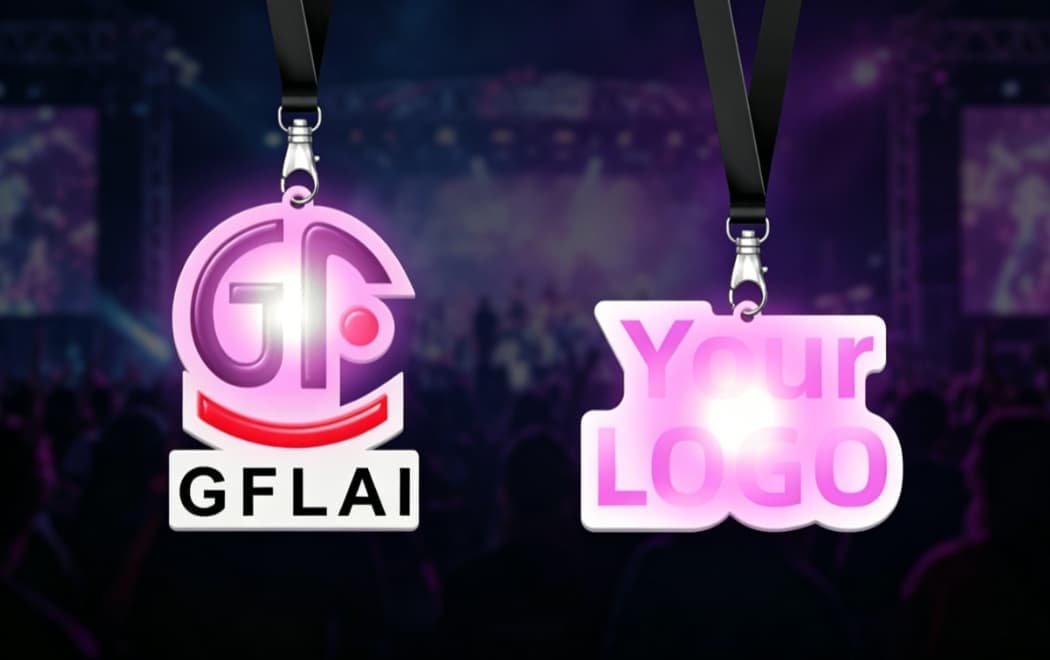
For custom-shaped acrylic badges (GFH-005), programmed DMX sequences make the brand logo appear to animate — pulsing, scanning, or shifting color across the badge surface. Because the LED positioning is designed per your artwork, the light follows the contours of your logo shape, creating a dynamic brand display on every attendee's chest.
After the show, the lanyard remains interactive. The push button still cycles colors and modes. The APP (if used) continues to work. Because the lanyard is battery-powered and self-contained, it becomes a wearable souvenir that stays functional for 8-12 hours of continuous use — long enough for after-parties, airport selfies, and next-day social posts.
L1 = Individual (push button) — L2 = Guided (APP/remote) — L3 = Orchestrated (DMX show sync)
Different events need different interaction depth. This matrix helps you choose the right combination of model, control method, and interactivity level.
| Event Type | Interaction |
|---|---|
| Stadium Concert | L3 |
| Corporate Gala | L2 |
| Music Festival | L2 |
| Trade Show Booth | L1 |
| Brand Activation | L3 |
| Award Ceremony | L2 |
Hybrid = DMX + APP combined (GFC007). Contact our team for a personalized recommendation based on your specific event requirements.
GFLAI is a 20-year LED manufacturer based in Shenzhen, China. We design, mold, assemble, and test every interactive LED lanyard in our own facility — from the circuit board inside the badge to the custom mobile APP that controls it.
Because we control the full production chain, we can offer interactive features (APP development, DMX integration, custom-shaped badges) at factory-direct pricing. No software licensing markups, no third-party hardware integration fees, no middleman coordination delays.
Our engineering team handles the transmitter configuration, APP white-label setup, and DMX addressing. You tell us your event size and control preference; we deliver a configured system that works out of the box.
In-house production & engineering — Shenzhen, China
Tell us your event size, preferred interaction level, and design requirements. We respond within 24 hours with a detailed proposal.
Fill in your details below and our sales team will get back to you.