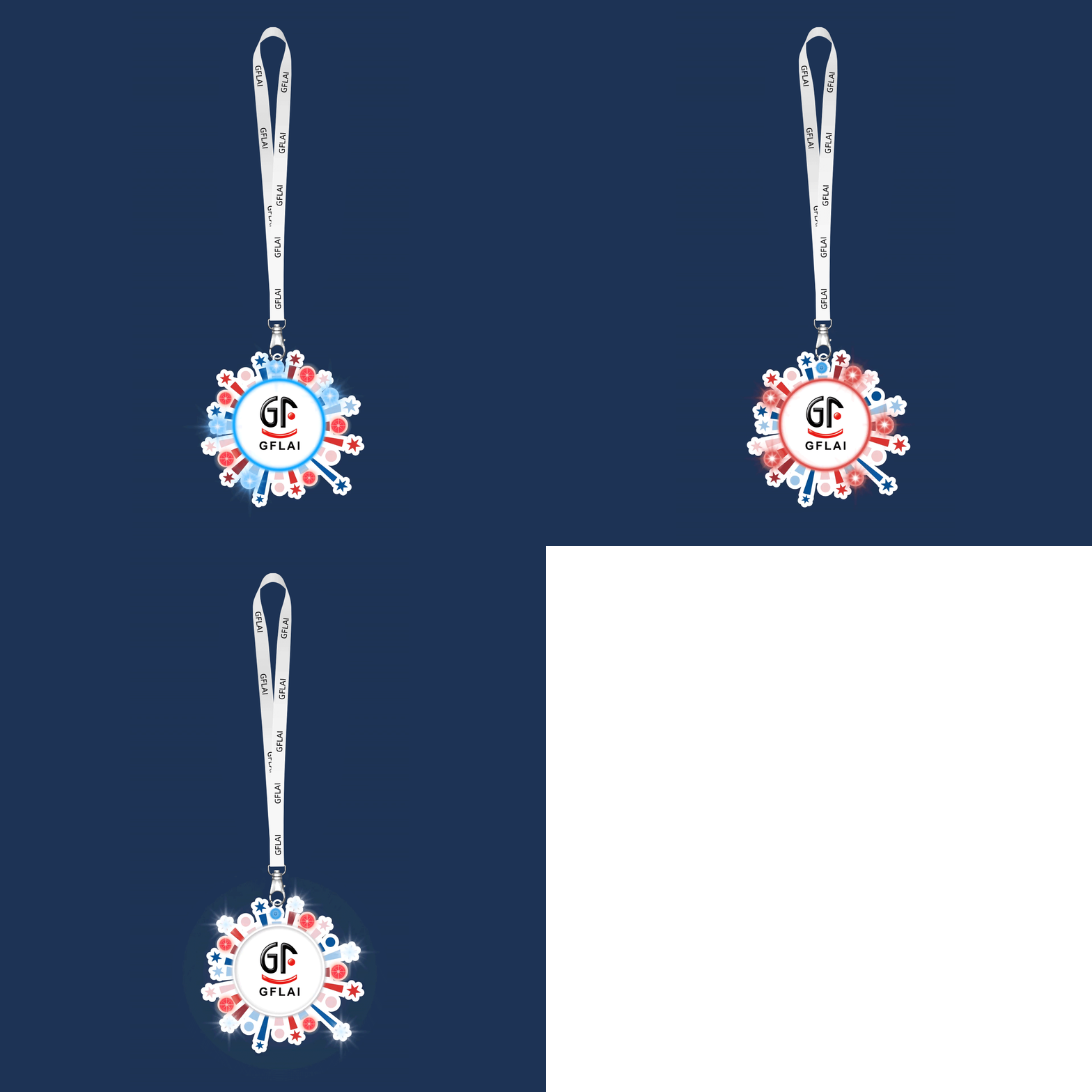
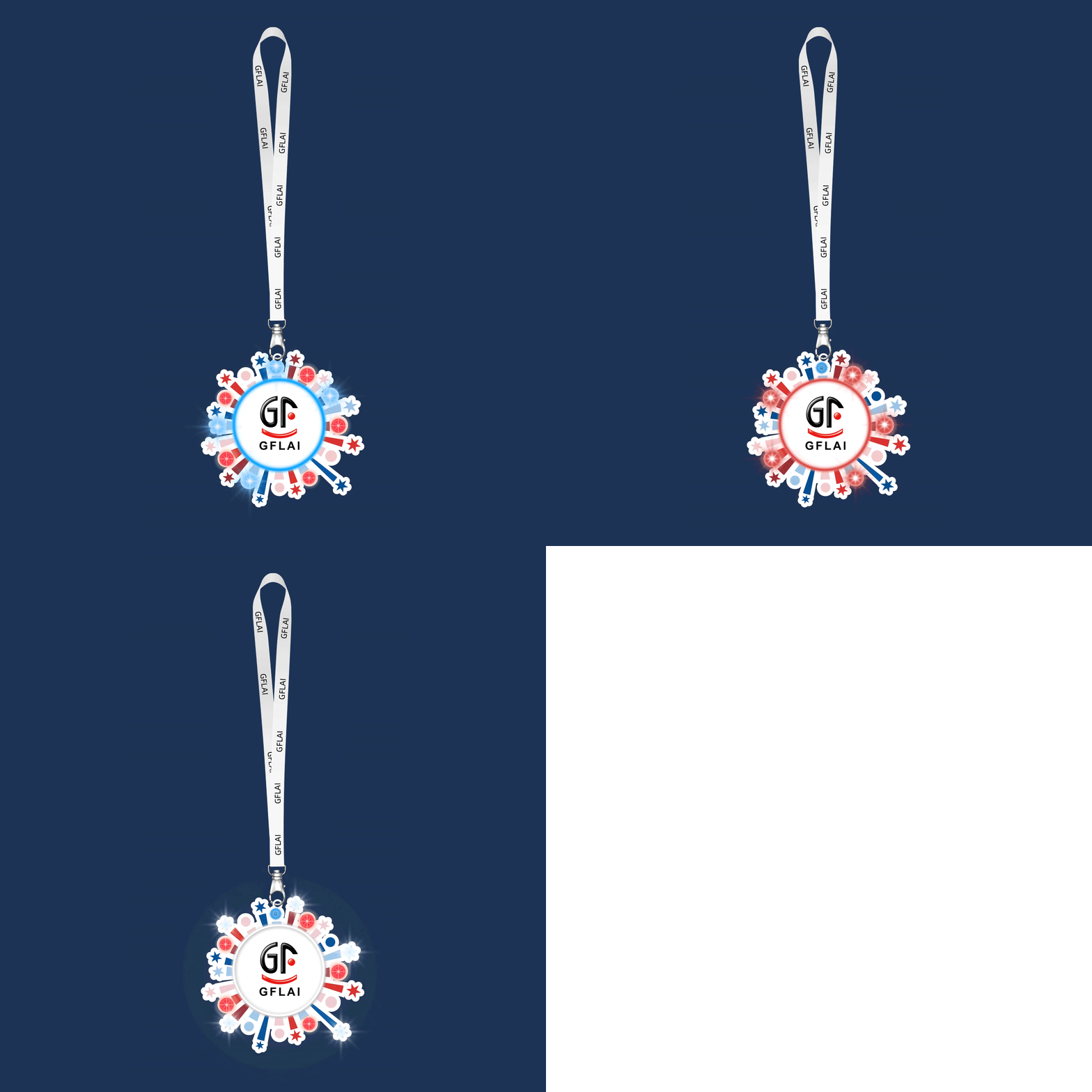
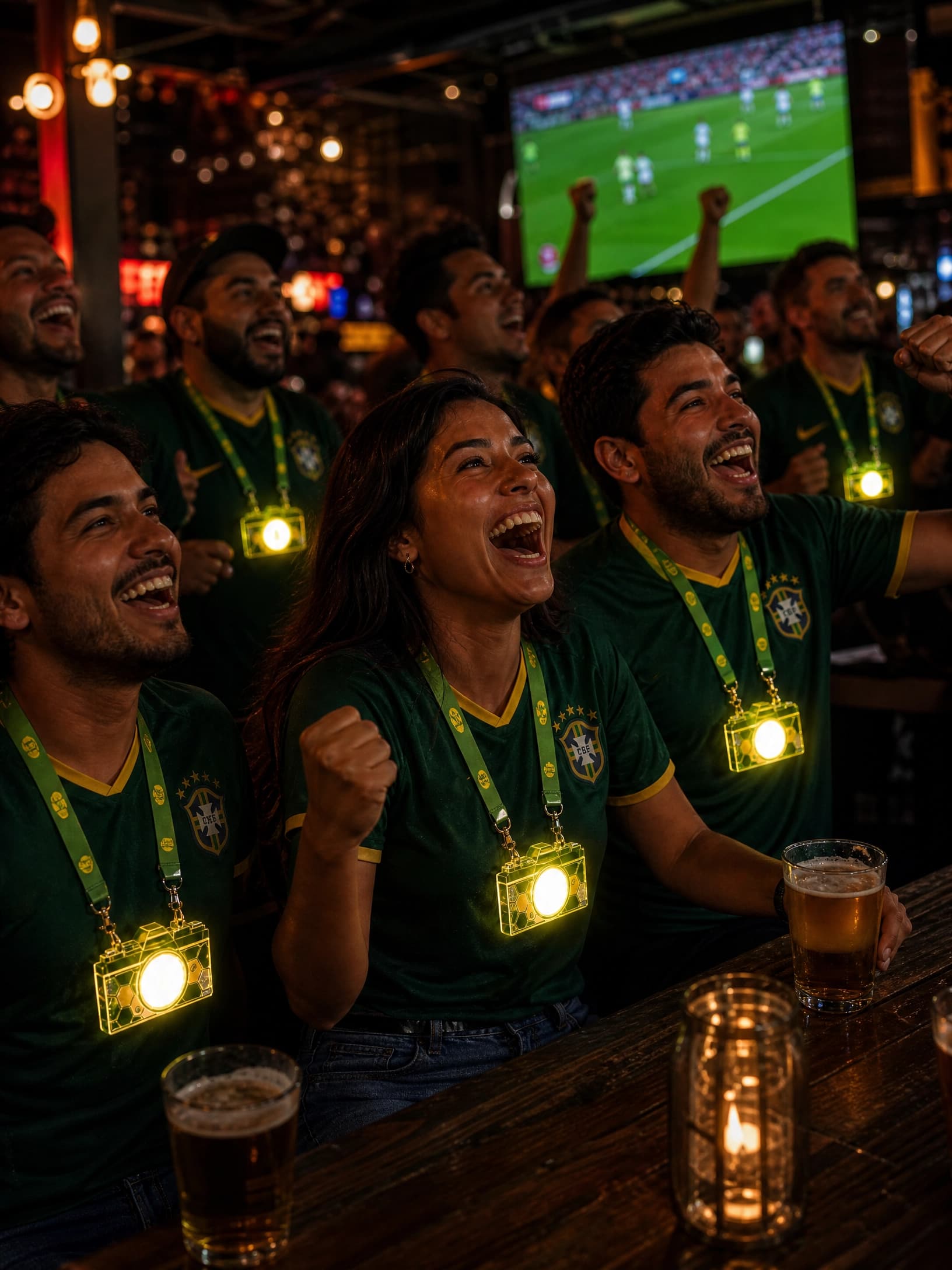
LED lanyards flashing with multiple patterns in dark environment creating dynamic light effects
20-Year LED Factory • Shenzhen

Flashing
LED Lanyard

Four distinct flashing modes — slow flash, fast flash, strobe, and fade — each serving a different purpose from crowd synchronization to safety identification. 7 RGB colors controlled via built-in button, RF remote, DMX512, or APP. Factory-direct from Shenzhen since 2005.

2
Flash Modes
7
RGB Colors
4
Control Methods
DDP
Global Delivery

Two Patterns. One Lanyard.

Slow flash for ambiance. Fast flash for visibility. Switch between them via the built-in button or a remote transmitter.

Slow flashing LED lanyard pattern with gentle on-off pulse in dark environment 1 Hz — Gentle Pulse

Slow Flash

Gentle on-off cycle at approximately 1 flash per second. Creates a calm, rhythmic pulse that draws attention without being aggressive. Best for ambient audience effects, brand activation zones, and VIP areas where the flash should enhance rather than dominate the atmosphere.

Fast flashing LED lanyard pattern with rapid on-off cycle in event setting 3 Hz — Rapid

Fast Flash

Rapid on-off cycle at approximately 3 flashes per second. Highly visible even from a distance and in brightly lit environments. Best for crowd identification, safety marking, staff location, and high-energy event moments where maximum attention is required.

Where Flashing Works Best

Different flashing patterns suit different environments. Here is how each mode is applied across real event scenarios.

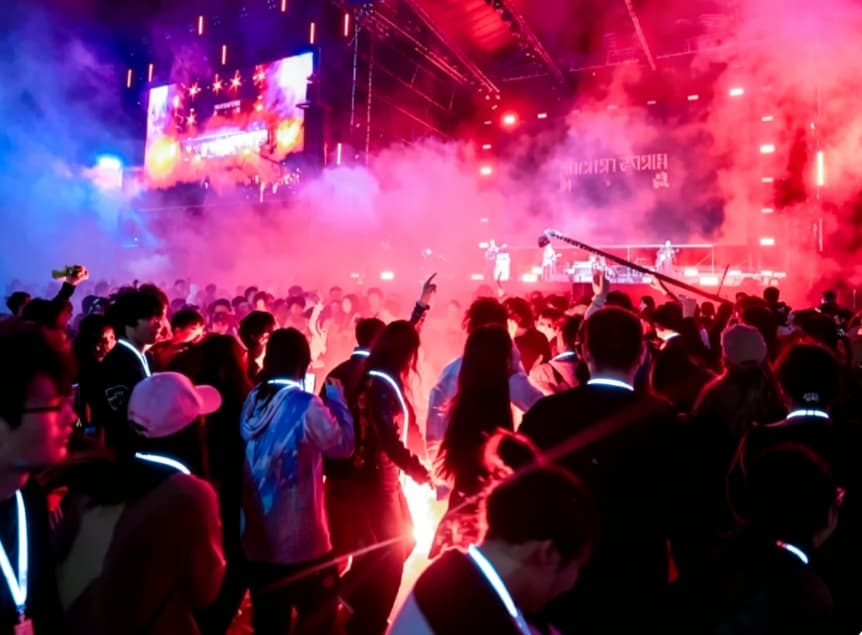
Concert audience with LED lanyards in strobe mode synchronized to music beat
StrobeConcerts & Festivals

Strobe mode synchronized to the music beat creates the highest-energy audience effect. When all lanyards strobe simultaneously via DMX or RF remote, the audience becomes a flashing light show that amplifies the performer's presence. Fast flash works well for between-song transitions and audience engagement segments.

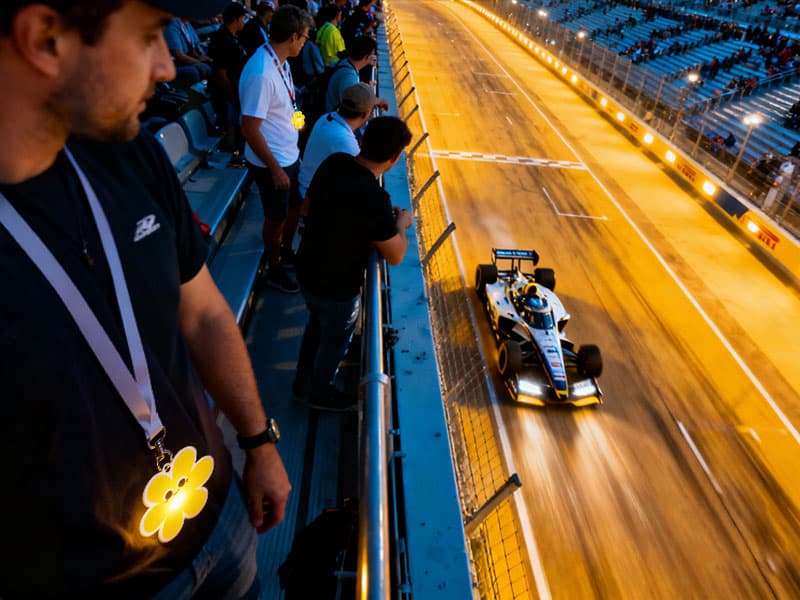
Event staff wearing fast flashing LED lanyards for safety and crew identification
Fast FlashSafety & Staff ID

Fast flash mode makes staff and security personnel instantly identifiable in large, crowded venues. Because the rapid on-off cycle catches the human eye more effectively than a steady light, event crews wearing fast-flashing lanyards can be located quickly even from across a stadium floor. This is standard practice for night events, festivals, and emergency response teams.

Corporate brand activation with slow flashing LED lanyards in brand colors at gala event
Slow FlashBrand Activations

Slow flash mode is ideal for corporate brand activations, product launches, and VIP galas. The gentle pulse draws attention to the branded lanyard without feeling disruptive. Brand colors can be matched precisely using RGB values, and the slow flash rhythm creates a sophisticated, premium atmosphere that aligns with high-end brand positioning.

VIP lounge with fade mode LED lanyards creating ambient color transitions
FadeAmbient & VIP Zones

Fade mode is the preferred pattern for VIP areas, lounge zones, and hospitality suites. The smooth color transitions create a calming ambient effect that complements conversation and networking. Unlike strobe or fast flash, fade mode does not compete with the event atmosphere — it enhances it. Best for charity galas, cocktail receptions, and after-party environments.

Flashing vs. Steady: When to Use Each

The choice between flashing and steady light depends on the goal: visibility, atmosphere, or identification.

Factor
Flashing Mode
Steady Mode
Attention capture
High — movement catches the eye
Moderate — blends with background
Readability of text on badge
Lower — pulsing light reduces clarity
Higher — constant illumination
Atmosphere
Energetic, dynamic, show-focused
Calm, premium, professional
Battery runtime
Shorter (approx. 6-8 hours)
Longer (approx. 8-12 hours)
Best for
Concerts, staff ID, safety
Corporate, ID badges, VIP zones
Photo/video capture
May strobe on camera
Consistent in frame

The Technology Behind the Flash

The flashing effect is generated by the LED driver circuit inside each lanyard badge. A microcontroller manages the on-off timing for each of the four patterns. When the built-in push button is pressed, the microcontroller steps through the modes in sequence: steady → slow flash → fast flash → strobe → fade → off.

For RF remote or DMX512 control, the flash mode selection is handled by the GFC004 or GFC005 transmitter. The transmitter sends a coded signal that tells the lanyard which mode to activate, along with the target color. Because the flash pattern is controlled at the lanyard level rather than by the transmitter, the same transmitter can command all four modes across thousands of units simultaneously.

The fade and strobe modes are generated using PWM (pulse-width modulation), which allows smooth brightness transitions without visible stepping. The slow and fast flash modes use a simple square-wave on-off cycle. All modes are pre-programmed and require no configuration — click the button or send the command, and the lanyard responds instantly.

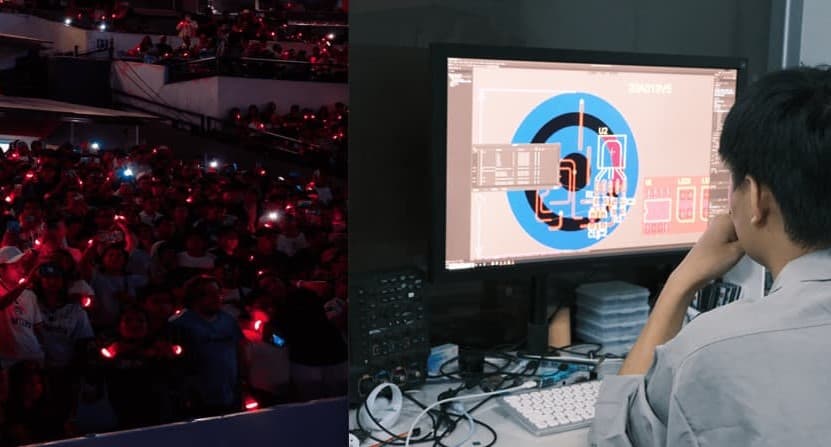
LED driver circuit board inside GFLAI lanyard showing microcontroller and RGB LED controller components
PWM Driver
Microcontroller-controlled flash
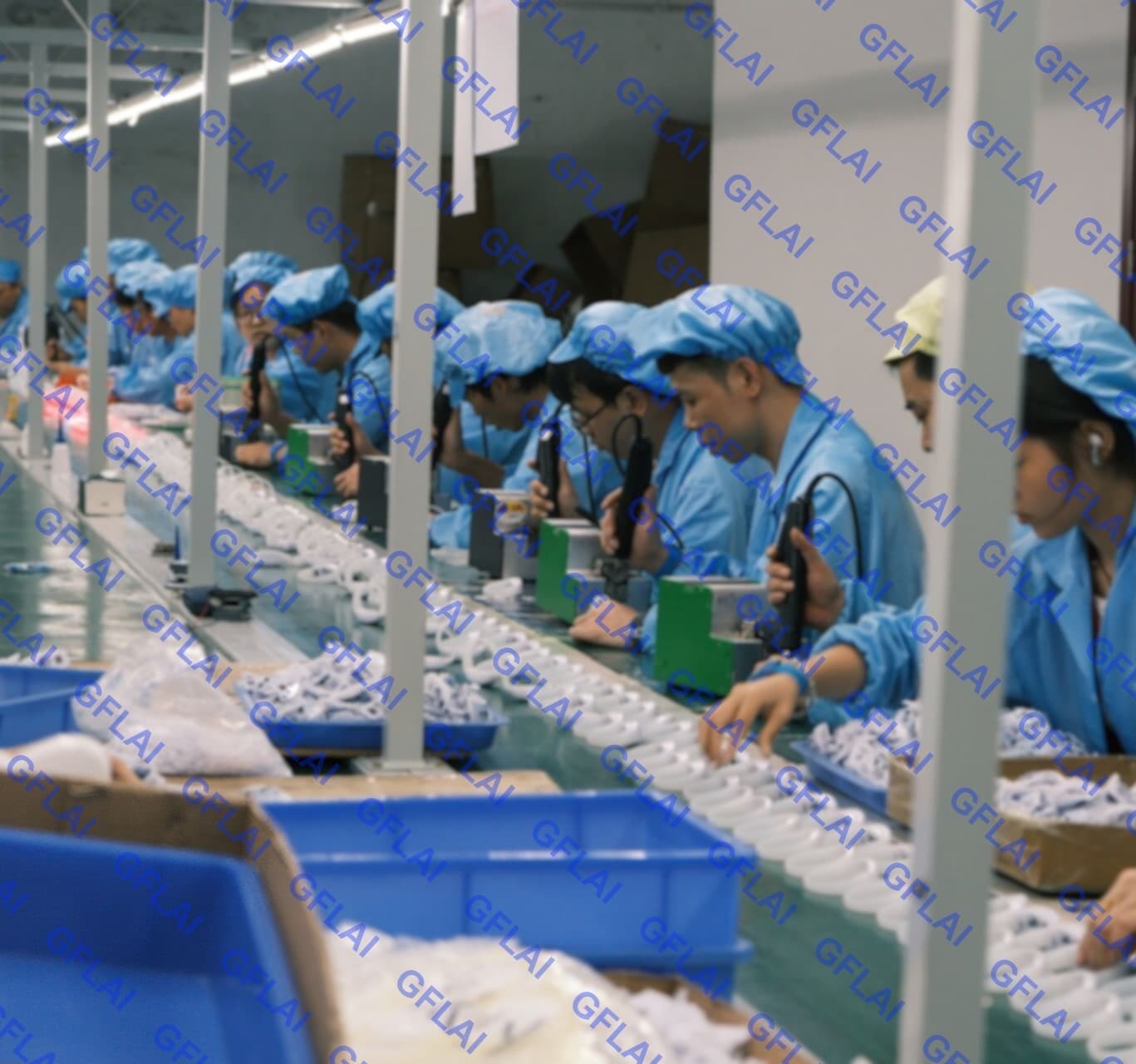
GFLAI LED lanyard assembly line in Shenzhen factory producing flashing light up lanyards
20+
Years in LED

Flashing Lanyards, Factory Built

Every flashing LED lanyard is assembled in our Shenzhen factory. Our in-house engineering team programs the microcontroller flash patterns, calibrates the PWM timing for each mode, and tests every unit for consistent flash rate and color accuracy before shipment.

We do not buy pre-programmed modules from suppliers. Every flash pattern is designed and tuned by our engineers to ensure the slow flash is calm, the fast flash is visible, the strobe is intense, and the fade transitions are smooth. If you need a custom flash pattern for a specific event, we can program it at the factory level.

FCC, CE, RoHS, KC certified. DDP shipping to US, UK, EU, Canada, and APAC.

Flashing Lanyard Questions

Does flashing mode drain the battery faster than steady mode? +
Yes, flashing modes consume slightly more power than steady-on mode because the LED is being switched on and off rapidly, and the microcontroller is actively processing the flash pattern. In practice, the difference is approximately 1-2 hours of runtime. Steady mode delivers 8-12 hours depending on the model, while flashing modes deliver approximately 6-8 hours. All models use standard CR2032 or AAA batteries that can be replaced within seconds.
Can all GFLAI lanyard models do all four flash modes? +
Yes. All five models (GFH-001 through GFH-005) support all four flashing modes. The RGB LED driver circuit is the same across the product line, so the flash patterns are identical regardless of the model you choose. The only difference is the number of LEDs that participate in the flash — models with more LEDs (GFH-001 with 10, GFH-003 with 10) produce a brighter flashing effect than models with fewer LEDs.
Can I create a custom flash pattern for my event? +
Yes. GFLAI's engineering team can program custom flash patterns at the factory level. This includes custom timing sequences, color combinations, and multi-step patterns (e.g., two fast flashes followed by one slow flash). Custom programming applies to the entire order batch and is configured during production. Contact our sales team with your pattern requirements for a feasibility assessment.
Can the flash mode be changed remotely during an event? +
Yes. With the GFC004 RF remote, GFC005 DMX512, or GFC008 APP transmitter, you can switch between all four flash modes in real time. For example, during a corporate event, you might start with steady mode for the keynote speech, switch to slow flash for the product reveal, and transition to fast flash for the closing celebration. The mode change takes effect immediately across all connected lanyards.
Does the flash mode affect the visibility of my printed logo? +
Flashing modes primarily affect the badge LED, not the strap printing. The strap logo remains visible and readable regardless of the flash mode. For the badge logo, steady mode provides the clearest logo visibility because the backlight is constant. Fast flash and strobe modes will make the badge logo appear intermittently, which can be effective for attention-grabbing but less suitable for situations where badge text needs to be read.
Can I use different flash modes for different audience sections? +
Yes, through zone control with DMX512 (GFC005) or APP (GFC008). Lanyards in different zones can be assigned different flash modes simultaneously. For example, VIP section lanyards can be set to slow fade, general admission to fast flash, and staff to steady mode — all controlled from a single transmitter. This is a common configuration for events with multiple audience tiers.
Get Started

Request a Yours Quote

Tell us about your event and flashing requirements. We respond within 4 hours.

🔒 Your information is protected under GDPR & CCPA.