Heavy-Duty DMX LED Wristbands For Arena Logistics
Live entertainment contractors cannot compromise on RF data dropouts during high-density stadium tours. GFLAI supports your volume supply with a dedicated 20-year manufacturing asset and specialized 433MHz radio frequency (RF) transceivers engineered to map directly into front-of-house lighting desks.[cite: 1]
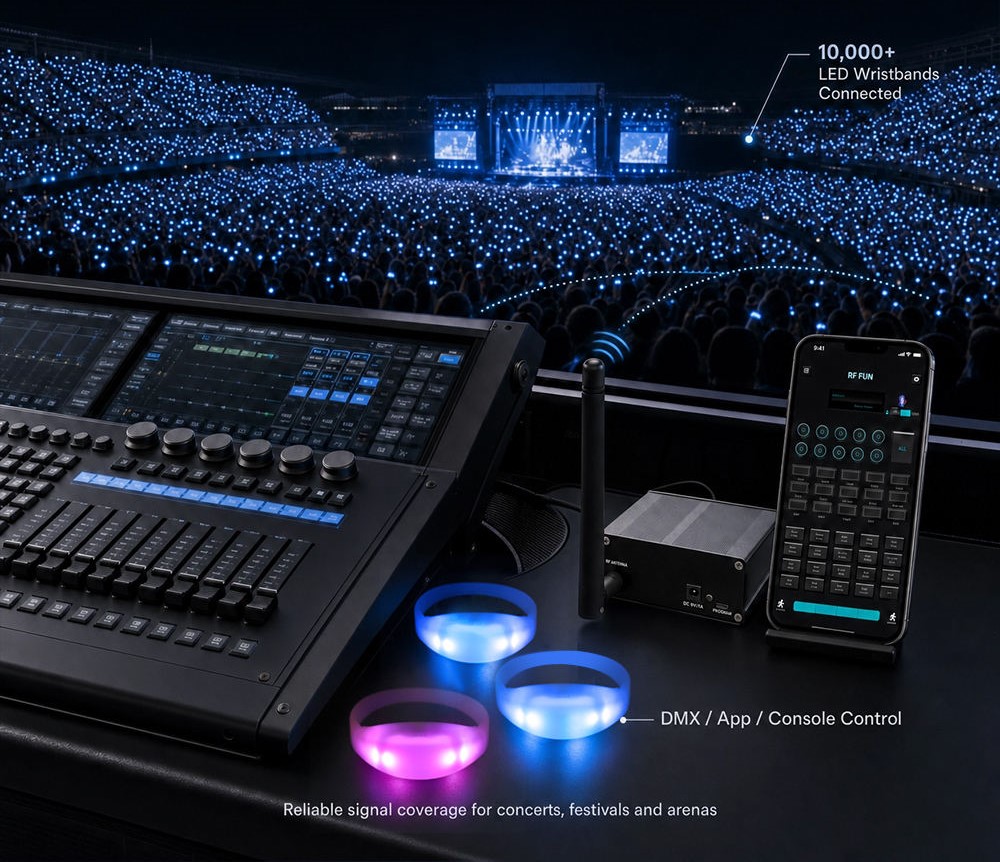
Native Integration With Commercial Lighting Desks
Our DMX control platform bypasses secondary network routers entirely. By hardwiring the primary master encoder directly to your lighting console, the spectator array reads macros simultaneously—guaranteeing prompt color changes across miles of seating rows.
Universal Console Pairing
Interfaces natively via standard 3-pin or 5-pin XLR setups with GrandMA, Avolites, and Hog systems, treating crowd zones as standard fixtures.
Narrowband Penetration
Operates outside congested 2.4GHz consumer Wi-Fi bands, driving clear data streams through heavy concrete and dense crowd interference.
Zone Matrix Mapping
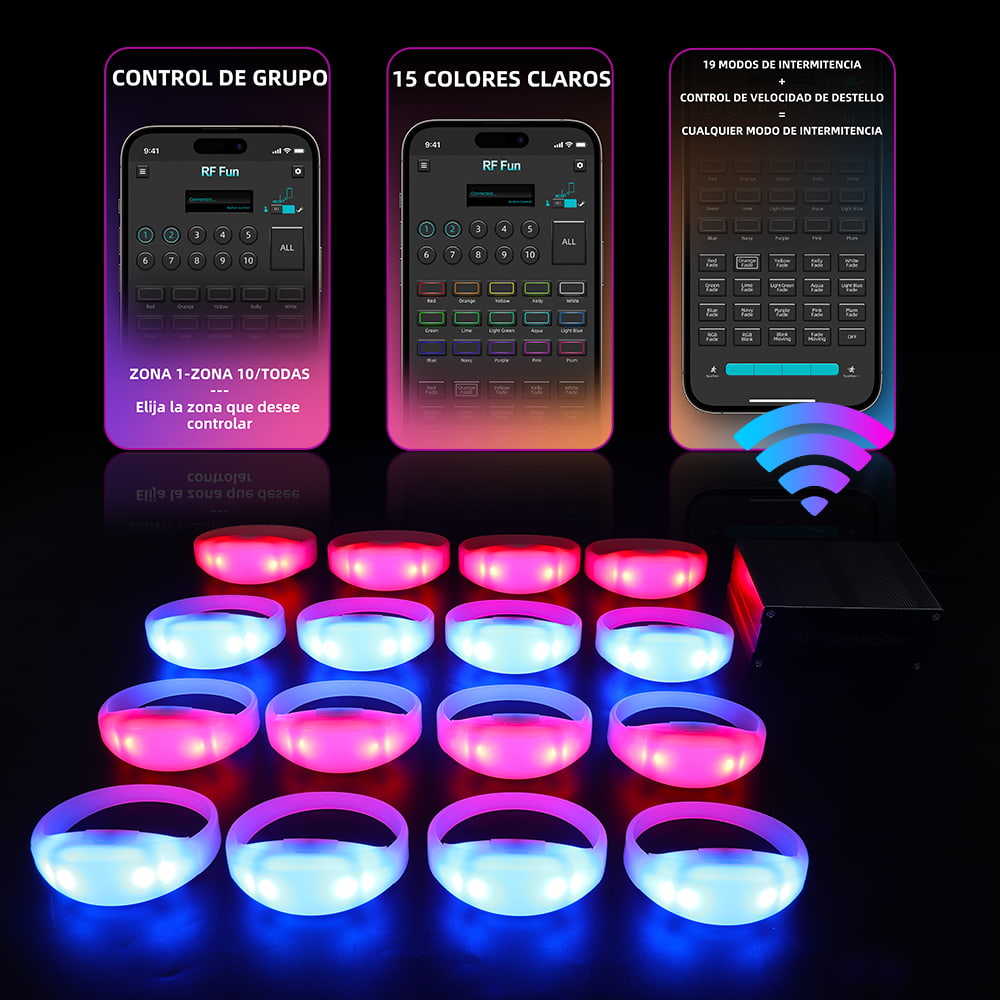
Supports division into distinct lighting control blocks for complex chasing effects or specific tier colors based on seating plans.
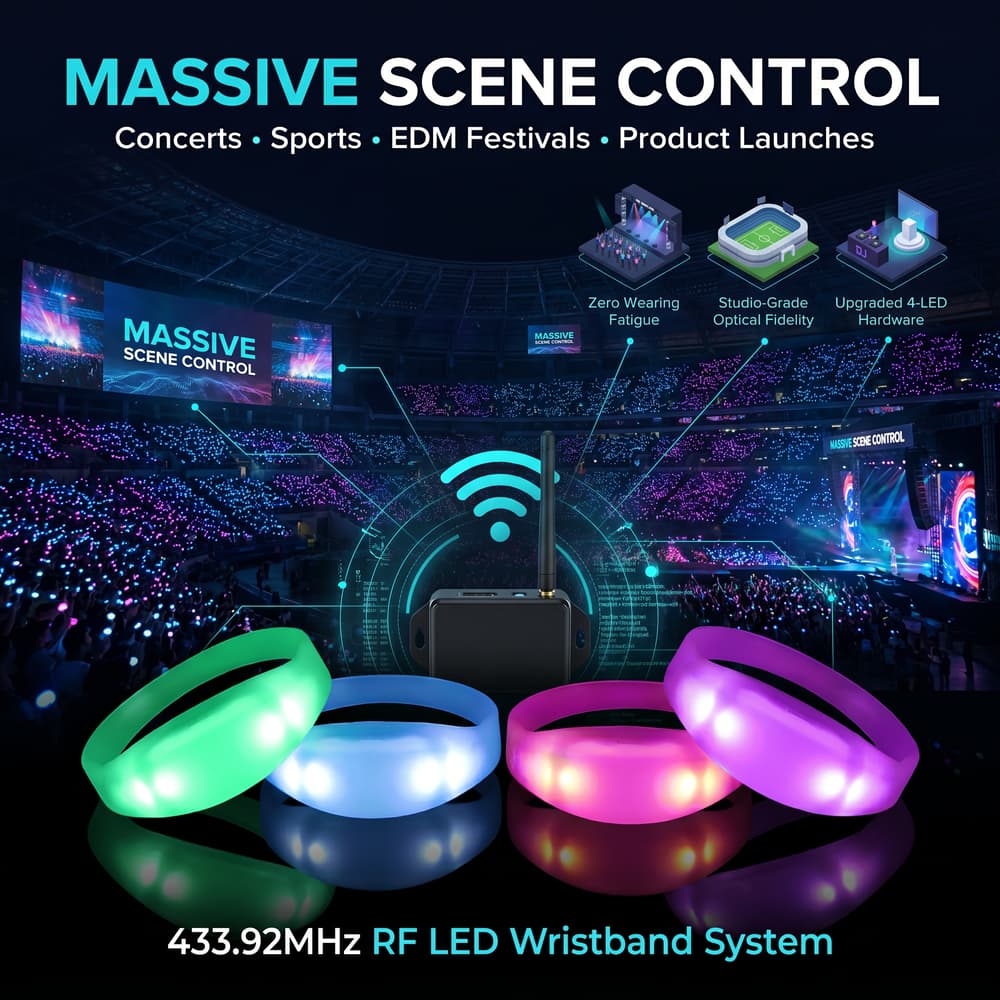
Eliminating Node Dropouts in Multi-Tier Stadiums
Because venue layout geometries vary, GFLAI's core engineering group builds dual-mode hardware redundancy into our master station electronics. This maintains consistent data transit lines across high balconies and open standing pits without relying on external, field-deployed repeaters.
Hardware-Level Spectrum Locking
Every high-volume wholesale run undergoes automated batch tracking on frequency scanners within our internal facility before export clearance.[cite: 1]
Industrial Shell Packages For Volume Procurement
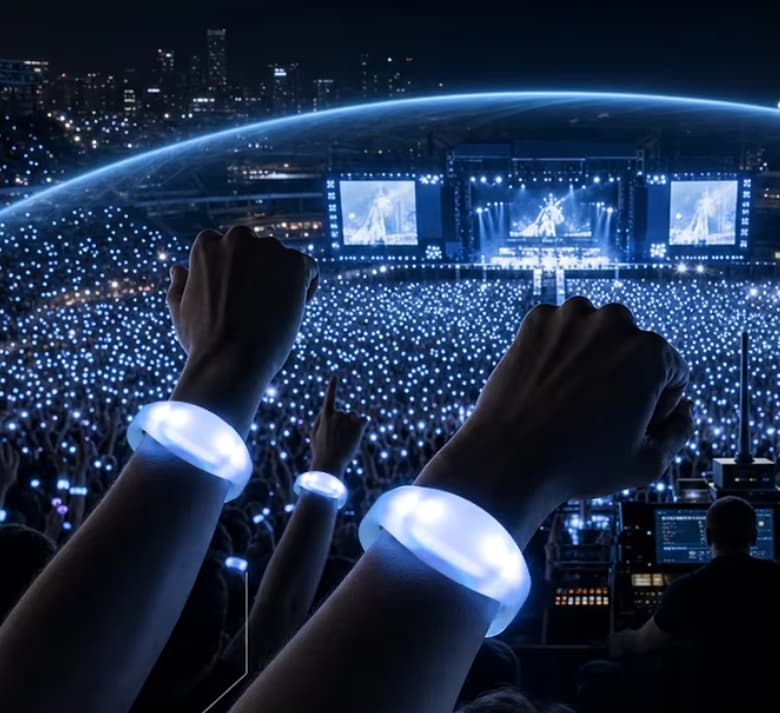
Elastic Silicone Assembly
Molded with high-resilience silicone polymers tested against moisture and sweat during multi-day stadium use.
Analyze Mechanical Blueprint →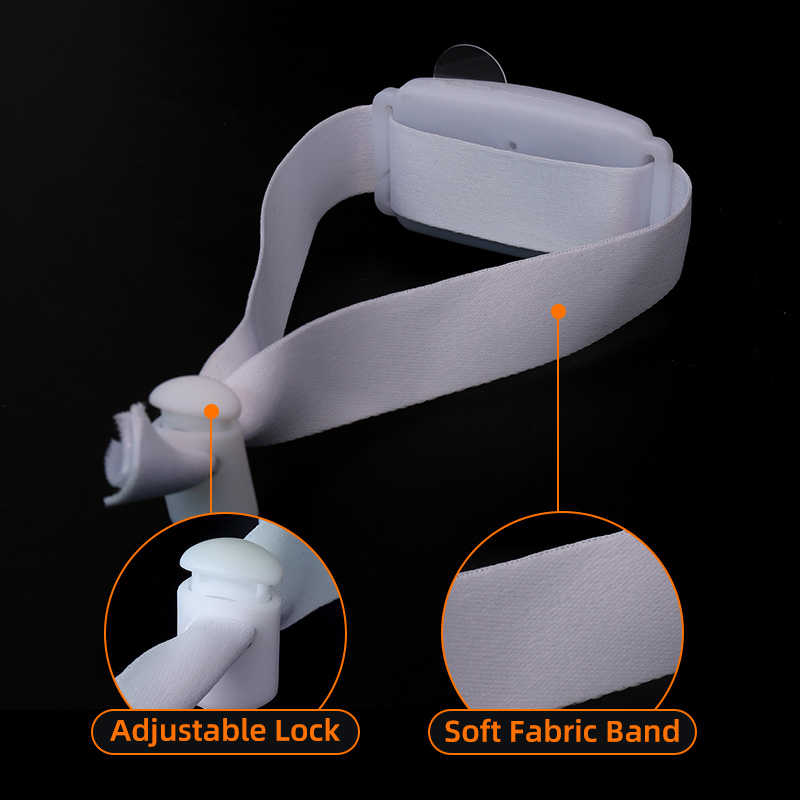
Security-Locked Woven Fabric
Features full-color dye sublimation branding space paired with non-reusable sliding tabs for crowd access verification.
Analyze Fabric Blueprint →DMX Control System Engineering Benchmarks
| Technical Index | Testing Threshold | Regulatory Standard |
|---|---|---|
| Execution Synchronicity | Millisecond execution window (No perceptible delay across large-scale arrays) | USITT DMX512-A Platform |
| RF Carrier Spectrum | 433MHz baseline frequency (Custom 868MHz / 915MHz options available) | CE / FCC Compliant Systems |
| Operational Lifecycle | Replaceable power chassis structure facilitating shell recycling plans | RoHS Directive 2011/65/EU |
| Moisture Protection | Sweat-resistant internal circuit casing (IP64 upgrade path on inquiry) | Laboratory Sealed Assembly |
20 Years of Quality Control Behind Your Bulk Supply
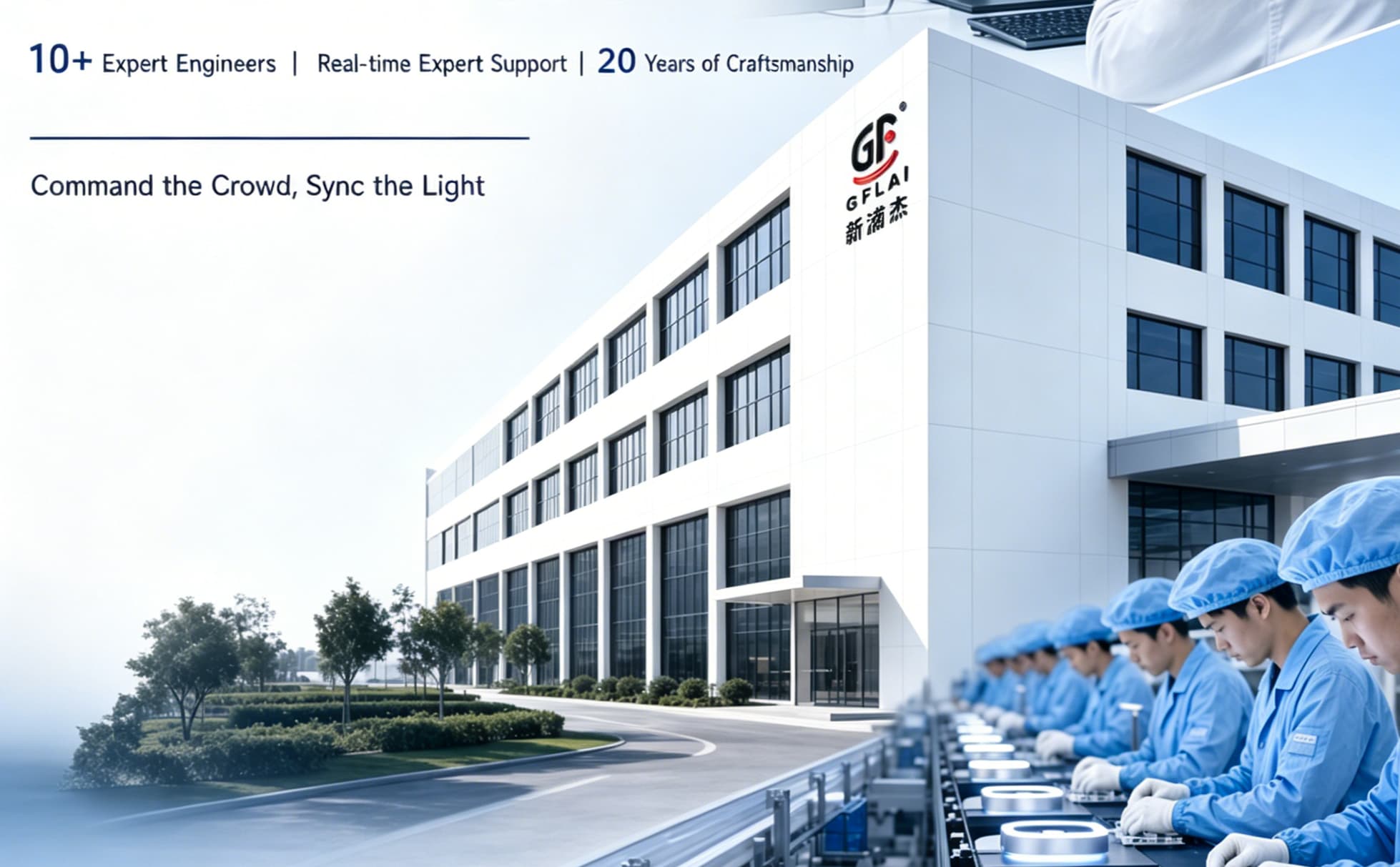
Operating our own ISO9001-certified production facility in Shenzhen eliminates intermediate trading agent overheads entirely[cite: 1]. Our internal management controls every stage from plastic injection molding to automated surface-mount electronic board population, ensuring stable production windows for tight event turnarounds[cite: 1].
Global Integrated DDP Freight & NDA Enforcement
We handle global shipping paths using **Delivered Duty Paid (DDP)** protocols, managing import processing, customs filings, and local entry fees straight to your stadium receiving gates[cite: 1]. Furthermore, we enforce strict **NDA compliance protocols** across our staff to safeguard your intellectual tour properties before public announcement dates[cite: 1].
DMX Wireless Integration Manual
Q1: How does the GFLAI system isolate DMX wristband control signals from stadium network congestion?
Our transceivers communicate over a dedicated sub-GHz narrowband carrier (433MHz radio frequency). This frequency band remains isolated from local consumer smart device traffic and commercial venue Wi-Fi routers, ensuring your lighting signals execute reliably with millisecond responsiveness[cite: 1].
Q2: Can we map individual seating tiers to unique parameters on a standard lighting console?
Yes. Our tracking chips can be assigned to separate address blocks. This allows lighting operators to control distinct audience sectors independently via standard console fixtures like GrandMA or Avolites platforms.
Q3: Do your bulk production runs align with regional environmental procurement policies?
All production runs use materials that comply with RoHS Directive 2011/65/EU and WEEE electronic management standards[cite: 1]. The cases feature accessible battery slots, enabling operators to refresh power cells and reuse the main housings across touring cycles.
Q4: What logistics steps protect procurement managers from unbudgeted transit surcharges?
We ship via standard Incoterms 2020 Delivered Duty Paid (DDP) protocols[cite: 1]. GFLAI covers all export handling, import tariffs, customs processing fees, and local port delivery costs upfront, providing clear cost predictability[cite: 1].
Q5: What is your peak production response framework for compressed stadium replacement cycles?
Backed by our automated SMT infrastructure and raw materials inventory in Shenzhen, we can accelerate operations to assemble and clear 100,000 units within a 10-day window under strict ISO9001 quality supervision[cite: 1].
Request a Yours Quote
Tell us about your event. Our team will respond within 4 hours with a customized proposal, including samples, pricing, and logistics schedule.